
Press Release
Project Civica has released findings from a multi-year analysis of New York State’s voter registration system, identifying structural deficiencies in voter-roll maintenance, data integrity, and verification processes. The report, formally submitted to members of the New York State Legislature on March 20, outlines patterns that indicate a lack of compliance with federal election law requirements and raise significant concerns regarding system accuracy and accountability.

News and Media Stories
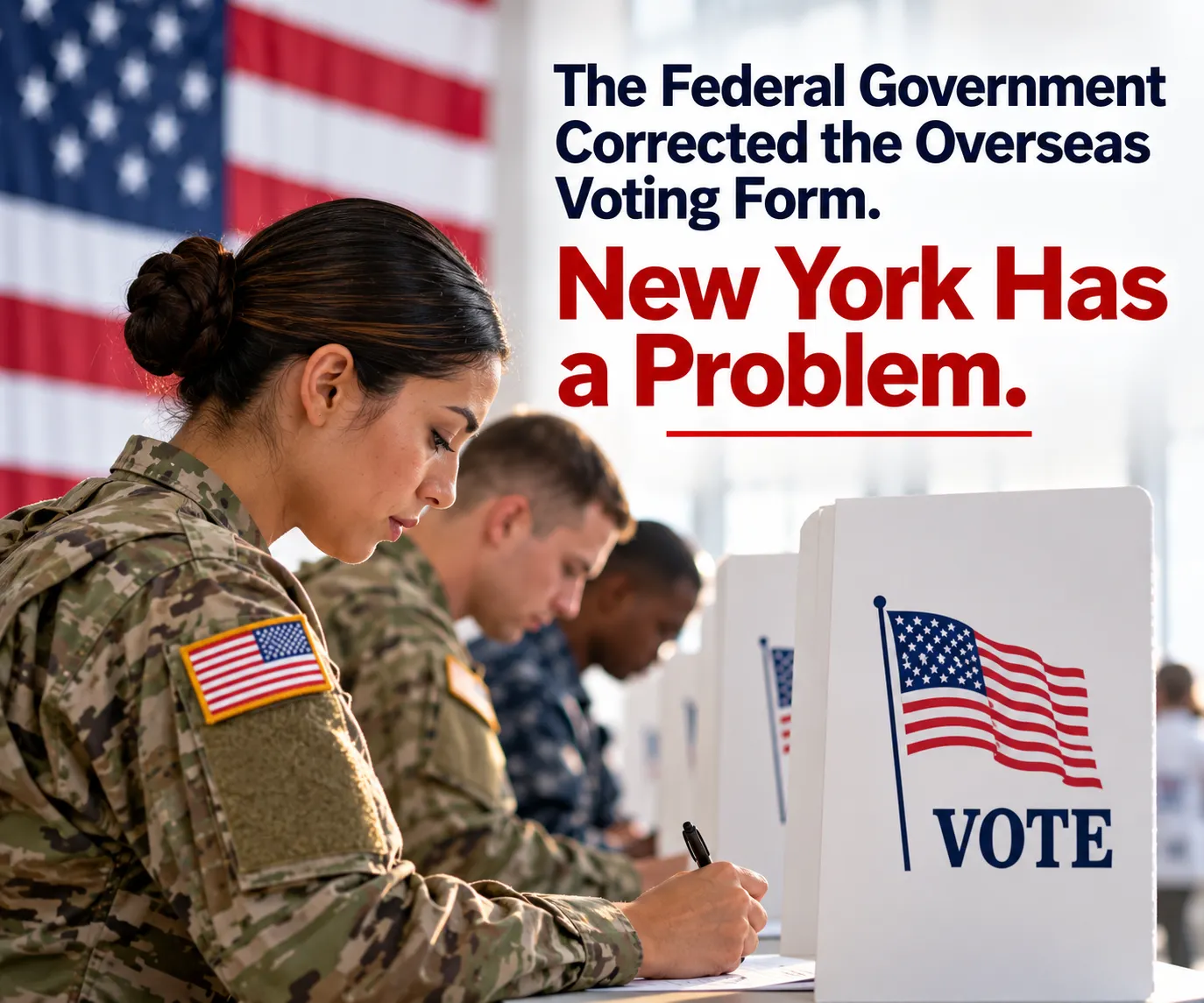
The Federal Government Corrected the Overseas Voting Form. New York Has a Problem.
The August 2026 FPCA revision removed an eligibility category that was never included in UOCAVA. New York separately grants voting eligibility to certain citizens who have never lived in the United States, but questions remain about how New York administers and verifies that state-created eligibility.

Project CIVICA President on New York Siena poll
Kim Hermance, President and Co-Director for Project CIVICA, said recent polling in New York shows majority support for proof of citizenship and photo ID requirements as federal lawmakers consider the SAVE America Act, according to an April 7 statement.
Project Civica President on New York elections
Kim Hermance, president and co-founder of Project Civica, said on May 8 that the Model Election Laws Handbook offers New York lawmakers and citizens practical tools to strengthen election processes and restore public confidence in administration.
PROJECT CIVICA FILES WITH THE SUPREME COURT OF THE UNITED STATES
Project CIVICA Files Amicus Brief with the U.S. Supreme Court Watson v. Republican National Committee (No. 24-1260) Project CIVICA has filed a case before the U.S. Supreme Court defending Congress’s mandate for a single Election Day in federal elections. Working with Citizens for New Jersey Election Integrity, we submitted an amicus curiae brief in Watson v. Republican National Committee to bring real-world election administration evidence to the Court. The case examines whether federal elections must follow Congress’s requirement that Election Day occur on a single designated day, or whether states may continue accepting ballots after Election Day has passed.
Filed: February 17, 2026
Oral Argument Scheduled: March 23, 2026
Video Overview
In this Project CIVICA statewide meeting recording, President Kim Hermance explains why the amicus brief was filed, the legal questions before the Court, and what this case could mean for election administration across the country. Watch to learn how citizen research, collaboration, and civic engagement can help bring real-world evidence to policymakers and the courts.
Support Citizen-Led Legal Advocacy
Citizen-led legal advocacy and research require significant time and resources. Your support helps Project CIVICA continue filing briefs, conducting election research, and educating citizens about their role in safeguarding our republic.
If you believe transparent and reliable elections matter, please consider supporting Project CIVICA’s work.
Every month, Project Civica analyzes New York’s statewide voter registration list to better understand how voter…
The July 2026 CISA Election Report was released to assess continuing security risks affecting election infrastructure…
Project CIVICA has just released a detailed examination of New York county voter rolls. The findings raise serious…
For generations, Americans have disagreed over taxes, spending, regulation, foreign policy and the proper size of…
Every month, Project Civica analyzes New York’s statewide voter registration list to better understand how voter…
I’ve noticed that a lot of people who call themselves democratic socialists are enamored with a handful of words:…
This month, we’re taking a closer look at how New York removes deceased voters from the voter rolls—what the law…
The immediate question is no longer simply whether New York should authorize ballot drop boxes. The Legislature has…
The documented risks in the July 16, 2026 release of declassified intelligence community documents point to structural…
In his primetime address to the nation on July 16, 2026, President Trump released a set of declassified intelligence…
As we mark the 250th anniversary of the signing of the Declaration of Independence, fireworks will light up the sky and…
Every election begins long before a ballot is cast.
It begins with a voter registration database.
Whether someone…
Last weekend, while speaking to an AMAC audience about the history of political parties in America, I discussed…
John Jay’s Federalist No. 4 was one of the earliest essays written in support of the Constitution and the proposed…
One of the most misunderstood issues in election administration and a question I get asked frequently is how voters are…